A brand’s corporate website for showcasing products and attracting partners
We created a Ukrainian-language website for a company that manufactures games and toys.
In the early stages of the business, there was no need for a full-fledged online store with a shopping cart and online payment options. The main goal was to professionally showcase the manufacturer, its products, its approach to toy design, and opportunities for collaboration.
The website helps introduce the brand to parents, retail partners, childcare facilities, wholesale buyers, and companies looking for products for special or corporate orders.
The project is optimized for mobile devices and can be further developed through the catalog, individual product category pages, a wholesale section, SEO, advertising, and an online store.
Language of the first version: Ukrainian
Launch timeframe: 7 days
Format of the first version: manufacturer’s website without online store functionality
Platform: WordPress + Elementor
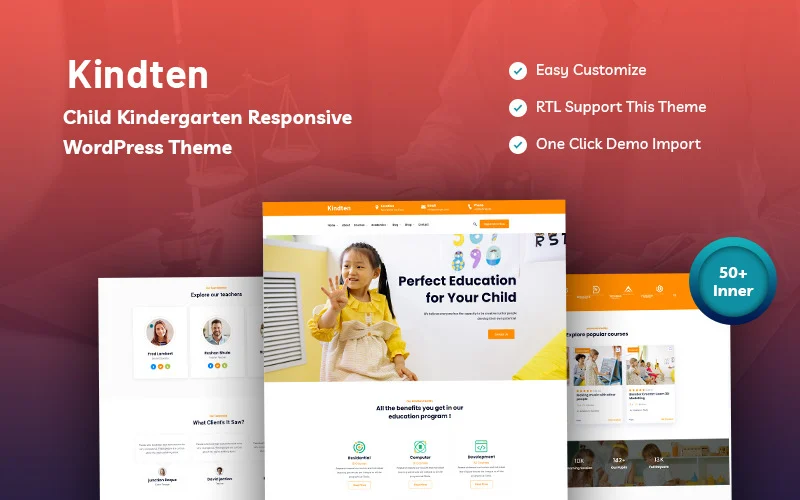
Design template: premium design from Template Monster —Kindten – Child Kindergarten Responsive WordPress Theme.
View Demo
Task
The toy manufacturer needed a website that would help:
- present the company in a professional manner;
- show the main product lines;
- create a recognizable brand image;
- explain the age range for which the toys are intended;
- demonstrate the benefits and use cases;
- to present the production process;
- build trust among parents and partners;
- receive wholesale and commercial inquiries;
- work properly on smartphones;
- lay the groundwork for SEO promotion;
- Add a catalog or online store later.
It was important to quickly build a professional digital foundation without overloading the first version with features that the business had no plans to use yet.
Our Approach
A premium design template with a children’s theme was used for the project.
The template was originally created for preschools and educational projects, but its visual style was well-suited for a toy manufacturer because of:
- in a friendly, colorful style;
- blocks for presenting fields of study;
- the ability to display photos of products;
- a clear, mobile-friendly structure;
- elements for the team presentation;
- forms of address;
- information pages.
The template was used as a technical and visual foundation, and the content was adapted to meet the manufacturer’s requirements.
The main focus was on:
- brand presentation;
- the logic behind product lines;
- trust in the products;
- information about production;
- opportunities for partners;
- preparing the website for future expansion.
Why didn’t we set up an online store during the first phase?
An online store is necessary when a business is ready to:
- online orders;
- retail prices;
- current balances;
- payment;
- delivery;
- order processing;
- returns;
- continuous updating of the catalog.
For a manufacturer, the top priority may be something else:
- introduce the company;
- display products;
- find wholesale customers;
- engage stores;
- work with childcare facilities;
- negotiate individual shipments;
- present the brand before negotiations;
- create an official source of information.
Therefore, launching a showcase website without a store was essentially the first step.
The business has gained a resource that is already driving trust and sales without creating an unnecessary operational burden.
Why Does a Manufacturer Need Its Own Website?
The manufacturer’s products may be sold through:
- stores;
- distributors;
- marketplaces;
- social media;
- retail chains;
- exhibitions;
- partner sites.
But having its own website gives a manufacturer the opportunity to:
- manage the brand’s image;
- talk about the company without the restrictions of a third-party platform;
- show the entire product range or key product categories;
- explain the features of the products;
- publish documents;
- receive direct inquiries;
- look for wholesale partners;
- run ads;
- improve search engine visibility;
- Add direct sales in the future.
The website becomes the manufacturer’s official digital presence.
The website should showcase not only the toys but also the manufacturer
What matters most to the buyer is the product itself.
For a partner, the entire business behind the product is important.
A potential wholesale customer may evaluate:
- product range;
- production capacity;
- minimum order quantity;
- production lead times;
- documents;
- stability of supply;
- packaging;
- labeling;
- customization options;
- terms of cooperation;
- delivery area;
- the manufacturer’s ability to increase production volumes.
Therefore, a manufacturer’s website should combine product presentations with information about the company, its processes, and partnership opportunities.
Product Mix
Even without an online store, the website can be expanded through a clear catalog of product categories.
For example:
- educational toys;
- board games;
- construction sets;
- arts and crafts kits;
- wooden toys;
- stuffed animals;
- pretend play sets;
- toys for active play;
- instructional materials;
- products for childcare facilities;
- gift sets;
- seasonal collections.
Additionally, products can be categorized by:
- age;
- game type;
- material;
- skills;
- by topic;
- the number of participants;
- place of use;
- series.
A proper structure helps users find what they’re looking for and lays the foundation for SEO.
Selection by Age
For toys, one of the key criteria is the recommended age.
On the website, you can create individual blocks or pages:
- for infants;
- ages 1 and up;
- for children ages 2–3;
- for preschoolers;
- for elementary school students;
- for teenagers;
- for family leisure activities.
On each page, you can explain:
- What age group is this product suitable for?;
- what skills it supports;
- how to use the toy;
- What are the restrictions?;
- included in the set;
- Which product lines are available?
This is useful for both parents and stores that organize their product selection by age group.
Choosing Based on Utility and Game Scenario
Products can be categorized not only by formal categories but also by their intended uses.
For example, toys can help develop:
- fine motor skills;
- logic;
- memory;
- attention;
- imagination;
- broadcast;
- creativity;
- coordination;
- spatial thinking;
- social interaction;
- teamwork skills.
It is important not to make unsubstantiated medical or psychological claims.
On the website, it’s best to explain the actual usage scenario and the skills required to play the game.
SEO Basics for a Toy Manufacturer
Potential partners and buyers may be looking for:
- a manufacturer of children’s toys;
- a Ukrainian toy manufacturer;
- wholesale toys;
- manufacturing of educational toys;
- toy supplier;
- toys for preschools;
- a board game manufacturer;
- wooden toys from the manufacturer;
- toys under our own brand;
- Corporate gift sets for children.
Therefore, the website can be developed gradually through:
- product category pages;
- age group pages;
- pages of content;
- series pages;
- wholesale section;
- web pages for children’s institutions;
- pages for business partners;
- articles;
- news;
- cases;
- answers to frequently asked questions;
- external publications;
- specialized catalogs;
- internal linking.
This approach helps attract people who aren’t yet familiar with the brand name but are looking for a manufacturer or a specific type of product.
What the client received
As part of the first phase, the client received:
- the manufacturer’s Ukrainian-language website;
- mobile optimization;
- a design concept based on children’s themes;
- the WordPress content management system;
- the ability to edit text and photos;
- a framework for the company’s presentation;
- a structure for describing product categories;
- the ability to add new pages;
- contact blocks;
- a basis for forms of address;
- SEO preparation;
- readiness to launch the ad campaign;
- the ability to integrate analytics;
- the option to add a catalog or online store at a later date;
- a platform that can be further developed or handed over to another team.
Product Presentation Without an Online Store
Even without a shopping cart or online payment options on the website, you can still fully showcase your products.
For an individual product or a series, you can display:
- title;
- photos;
- brief description;
- recommended age;
- materials;
- configuration;
- dimensions;
- color options;
- game scenario;
- features;
- packaging;
- Available series;
- documents;
- how to order;
- the bulk query form.
Instead of the “Buy” button, you can use:
- Find out the terms and conditions;
- Request a catalog;
- Get a wholesale quote;
- Contact the manufacturer;
- Become a partner;
- Discuss the order.
This is more in line with the manufacturer’s model if the price and terms depend on volume.
Production Presentation
It is important for a manufacturer to demonstrate that its products are made by a real company with well-established processes.
You can post the following on the website:
- the company’s history;
- photos of the production process;
- command;
- the main stages of creation;
- selection of materials;
- design development;
- quality control;
- packaging;
- composition;
- production capacity;
- supply geography;
- Video of the process.
This builds trust and sets the manufacturer apart from companies that merely resell other companies’ products.
Safety and Documents
For children’s products, it is especially important to accurately provide information about:
- recommended age;
- materials;
- Terms of Use;
- warning;
- small parts;
- care;
- storage;
- labeling;
- certificates;
- declarations;
- instructions.
Only factual and verified information should be used on the website.
You should not state that a product is completely safe or guaranteed to have a positive effect on a child’s development unless such claims are supported by documentation.
Documents can be posted:
- on the product pages;
- in a special section;
- in the partner resources;
- in the download catalog.
Visual Presentation
When it comes to toys, it’s important to show more than just the product against a white background.
It is helpful to demonstrate:
- the toy from different angles;
- scale;
- configuration;
- details;
- packaging;
- color options;
- gameplay;
- an example of an assembled model kit;
- use in a child’s space;
- products from the same series.
With permission, you may use photos of children while they are playing.
Real photos of products and production are more important than decorative images from a design template.
Wholesale Division
You can create a separate section for:
- retail stores;
- online stores;
- retail chains;
- distributors;
- marketplace for sellers;
- regional representatives;
- children’s stores;
- wholesale distribution centers.
The page can display:
- Available categories;
- minimum order;
- delivery times;
- packaging options;
- documents;
- delivery area;
- regularity of deliveries;
- the option to request a price quote;
- Contact information for the manager in charge.
You can also add a form in which the partner specifies:
- company name;
- website or retail locations;
- region;
- form of cooperation;
- required categories;
- estimated volume;
- contact information.
Working with Child Care Facilities
Individual clients may include:
- daycare centers;
- schools;
- development centers;
- clubs;
- children’s rooms;
- camps;
- rehabilitation centers;
- civil society organizations;
- charitable foundations.
The following may be important to them:
- age appropriateness;
- wear resistance;
- ease of care;
- use within the group;
- documents;
- packages;
- the option to order sets;
- cashless payment;
- delivery;
- Commercial proposal.
On the website, you can create a separate page featuring product selections for establishments.
Corporate Orders
The manufacturer may offer companies:
- gift sets for children;
- branded products;
- special packaging;
- gifts for employees’ children;
- products for events;
- kits for charitable projects;
- production of a limited series;
- products under the customer’s brand.
A corporate page may include:
- product samples;
- personalization options;
- minimum order quantity;
- dates;
- packaging;
- option to add a logo;
- request form;
- Loading the commercial catalog.
OEM Manufacturing
If the company has the necessary resources, the website can be developed to attract orders in the following formats:
- private label;
- contract manufacturing;
- custom manufacturing based on the customer’s design;
- development of a new game;
- manufacturing of individual components;
- special product lines for retail chains.
On this page, it is important to explain:
- what the company can produce;
- what materials it uses;
- What is the minimum volume?;
- What are the stages of the ordering process?;
- Who is responsible for the design;
- how a prototype is created;
- what deadlines;
- how the packaging fits;
- What documents can the manufacturer provide?
Partner Catalog
The next step could be a digital or PDF catalog.
It can be used to display:
- photos;
- items;
- categories;
- recommended age;
- specifications;
- packaging;
- quantity per box;
- wholesale terms;
- Available series;
- Manager’s contact information.
On the website, you can:
- watch online;
- download;
- receive after filling out the form;
- send automatically via email;
- update regularly.
Collecting contacts through directory searches can help build a database of potential partners.
The Role of Social Media
Instagram, Facebook, YouTube, TikTok, and Pinterest can support the website through:
- product reviews;
- behind-the-scenes video;
- a game demonstration;
- new episodes;
- packaging;
- reviews;
- exhibitions;
- getting to know the team;
- selection tips;
- ideas for leisure activities;
- Go to the website.
Social media platforms provide regular engagement and visual appeal, while the website serves as a repository for official, structured information about the manufacturer.
Site 4 biz Growth can integrate a website, SEO, content, social media, advertising, directories, and B2B communication into a single system for attracting partners.
The Role of Exhibitions and Presentations
Toy manufacturers can attract partners through:
- industry trade shows;
- fairs;
- conferences;
- festivals;
- procurement meetings;
- presentations;
- business missions.
The website helps keep the conversation going after the event.
You can include a QR code on business cards, display stands, and catalogs that links to:
- the company’s page;
- wholesale terms;
- catalog;
- new collection;
- form of partnership;
- Manager’s contact information.
This way, the website supports offline sales and helps ensure that you don’t lose the contacts you’ve gathered.
Content for the manufacturer’s website
Useful content can help:
- attract search traffic;
- explain the products;
- demonstrate expertise;
- support our partners;
- answer questions;
- create content for social media.
These could be posts about:
- Choosing toys by age;
- game scenarios;
- care;
- storage;
- materials;
- new episodes;
- production process;
- board games;
- creative activities;
- supplying children’s facilities;
- gift sets;
- Corporate orders.
A single piece of content can be adapted for use on the website, social media, in emails, and in presentations for partners.
How to Further Develop the Website
The next steps could be:
- complete product catalog;
- individual product pages;
- categories;
- filters;
- pages by age;
- pages by skill;
- wholesale section;
- Download the price list;
- catalog request;
- page for childcare facilities;
- corporate orders;
- private label;
- documents;
- certificates;
- partner case studies;
- news;
- blog;
- video;
- CRM;
- email automation;
- multilingualism;
- international promotion;
- SEO;
- Google Ads;
- Meta Ads;
- remarketing;
- a full-featured online store;
- online payment;
- integration with delivery;
- product feeds;
- marketplaces.
The specific direction of development depends on whether the manufacturer plans to work primarily with wholesale partners, end customers, or a combination of both.
Future expansion into an online store
If the manufacturer decides to expand its direct retail sales, the following can be added to the website:
- WooCommerce;
- product cards;
- prices;
- options;
- availability;
- shopping cart;
- placing an order;
- payment;
- delivery;
- personal account;
- wish list;
- reviews;
- promo codes;
- gift certificates;
- product feeds.
Since the website runs on the open-source WordPress platform, this development can be carried out in phases without having to completely rebuild the site from scratch.
How the customer saves money in the future
Using a professional design template saved us time and money by eliminating the need to build standard website elements for the manufacturer from scratch.
The customer saves:
- time required for the initial startup;
- budget for the basic design;
- costs associated with mobile adaptation;
- funds for a store that isn’t needed at this stage;
- time spent creating new pages;
- the cost of a full restart when a directory appears;
- budget for a separate website for wholesale customers;
- costs associated with a closed platform;
- time for a routine update of information;
- funds for future expansion.
The website can evolve alongside production, product offerings, partners, and sales channels.
Why We Chose a Premium Design
Toy manufacturers’ websites have many common elements:
- the main clause;
- information about the company;
- product lines;
- photos;
- advantages;
- information about the materials;
- Affiliate section;
- command;
- reviews;
- form of address;
- contact information;
- mobile version.
Building all of these elements from scratch would increase the timeline and budget, but it wouldn’t necessarily yield better results for the business.
Thanks to my professional background, I was able to get right to the heart of the matter in just one week:
- the manufacturer’s official presentation;
- product demonstrations;
- building trust;
- receiving partner inquiries;
- preparation for further development.
Order Website promotion strategy for a toy manufacturer
Do you need a website for a toy and game manufacturer?
Site 4 biz Build creates websites for:
- toy manufacturers;
- children’s product brands;
- board game manufacturers;
- manufacturers of building sets;
- workshops;
- suppliers of children’s products;
- wholesale companies;
- local brands;
- contract manufacturers;
- companies that plan to gradually transition to online sales.
We can help:
- create a corporate website;
- show the production process;
- organize the product line;
- create a wholesale section;
- prepare a catalog;
- upload documents;
- add partner inquiry forms;
- enable analytics;
- improve SEO;
- launch an ad;
- prepare a multilingual version;
- expand the website into an online store;
- Integrate the website, catalogs, social media, and direct B2B communications into a single system for attracting partners.
Tell us about your project: available resources, goals—and we’ll help you achieve them.